Thursday, May 5, 2016

Useless Clatter...JJ Gittes: Exemplar de Noir


About thirty minutes into Chinatown, Jack Nicholson’s JJ Gittes questions Mrs. Mulwray about the death of her husband; specifically, her seemingly blasé attitude towards the event. As a detective pressing for answers, Gittes’ look fits him to a T— three-piece suit, top hat, and a cigarette perched between his fingers. Everything is in its right place, until he utters: “Look. I do matrimonial work. It’s my métier.” Métier? As Roger Ebert also wonders in his Great Movie essay for the film, what is this hard-boiled detective doing with a word like métier? Humphrey Bogart’s Phillip Marlowe wouldn’t be caught dead tossing around a word like that. 

Continue reading on CFLXMOVIEOFTHEWEEK.COM

Saturday, March 26, 2016

Useless Clatter...Orson Welles: The Man, The Myth, The Misunderstood


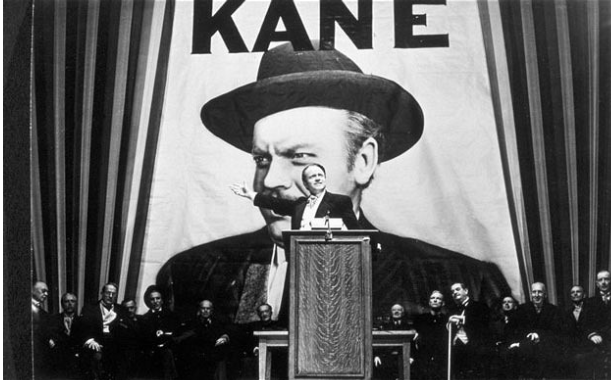
From a rising theater talent to America’s most outstanding auteur, Citizen Kane launched Welles’s career, forming the legacy that exceeds him to this day. Yet, that legacy is one of convoluted crossings. For many, Welles is considered one of the cinema’s finest directors. But to some others though, Welles’ legacy remains alive not though his great films, but through a series of fumbling commercial outtakes preserved on YouTube. In color and occurring decades after Kane, the minute and a half video stars an overweight and seemingly over-served Orson Welles pitifully trying to deliver lines for a wine commercial. The video has over one million hits, and there are two, in which case that number can be doubled. This total amounts to more than that of any trailer for any of his films, including Citizen Kane.

Continue Reading at: CFLXMOVIEOFTHEWEEK.COM

Wednesday, February 10, 2016

Useless Clatter...2016 Best Picture- Whys and Why Nots


As the Oscar date fast approaches, our Best Picture prediction is growing foggier by the day. Golden Globes and Guild Awards have been spread out amongst the contenders. With no single frontrunner, 2016’s Best Picture race is one of the closest in recent memory. A few weeks ago, Las Vegas released their odds for all of the nominees in the major Oscar categories. With the likes of Leo and Brie Larson dominating the awards season, it seems that most of the categories will offer few surprises. But the granddaddy of them all will be a photo finish.

Posted below are the potential winning odds for each of the eight Best Picture nominees, along with some thoughts as to why they could win and why they might not.

Spotlight 4 to 5
Why: If any film has a lead, no matter how small, Spotlight might claim it- at least according to Vegas. This delicately paced yet unnerving thriller has received nothing but praise since its release, picking up top prizes from the LA Film Critics and the Critics’ Choice. A –listers abound, Spotlight boasts an excellent ensemble cast and a wickedly tight-knit screenplay, two of the Academy’s favorite ingredients. Underdogs searching for truth against the immoralities of an institution...is this not the very reason we tell stories and go to movies?

Why Not: Said story deals with sexual abuse in the Catholic Church. Accolades aside, it’s hard to predict how the conservative Academy voters will react to such abhorrent material. Also, from a purely cinematic standpoint, Spotlight does not exactly dazzle. One critic cleverly compared the movie’s simple and muted style to that of Michael Keaton’s khakis. In the celebration of filmmaking, and with such a dynamic movie like The Revenant hot on its heels, can Spotlight’s substance trump The Revenant’s style?

Notable Victories thus far: Los Angeles Film Critics Association, Critic’s Choice Awards

Monday, January 25, 2016

Useless Clatter...The Hal 9000: Technology That Talks

(Originally posted for CFLXmovieoftheweek.com)
Depictions of the future serve as one of the most alluring aspects of science fiction. Even better is when these cinematic futures become the past. Audiences may relish in the opportunity to nitpick the accuracy of these fictitious creations in the aided benefit of hindsight. (Sorry Back to the Future II, there were no hoover boards yet in 2015. We were still trying to figure out the Segway.)

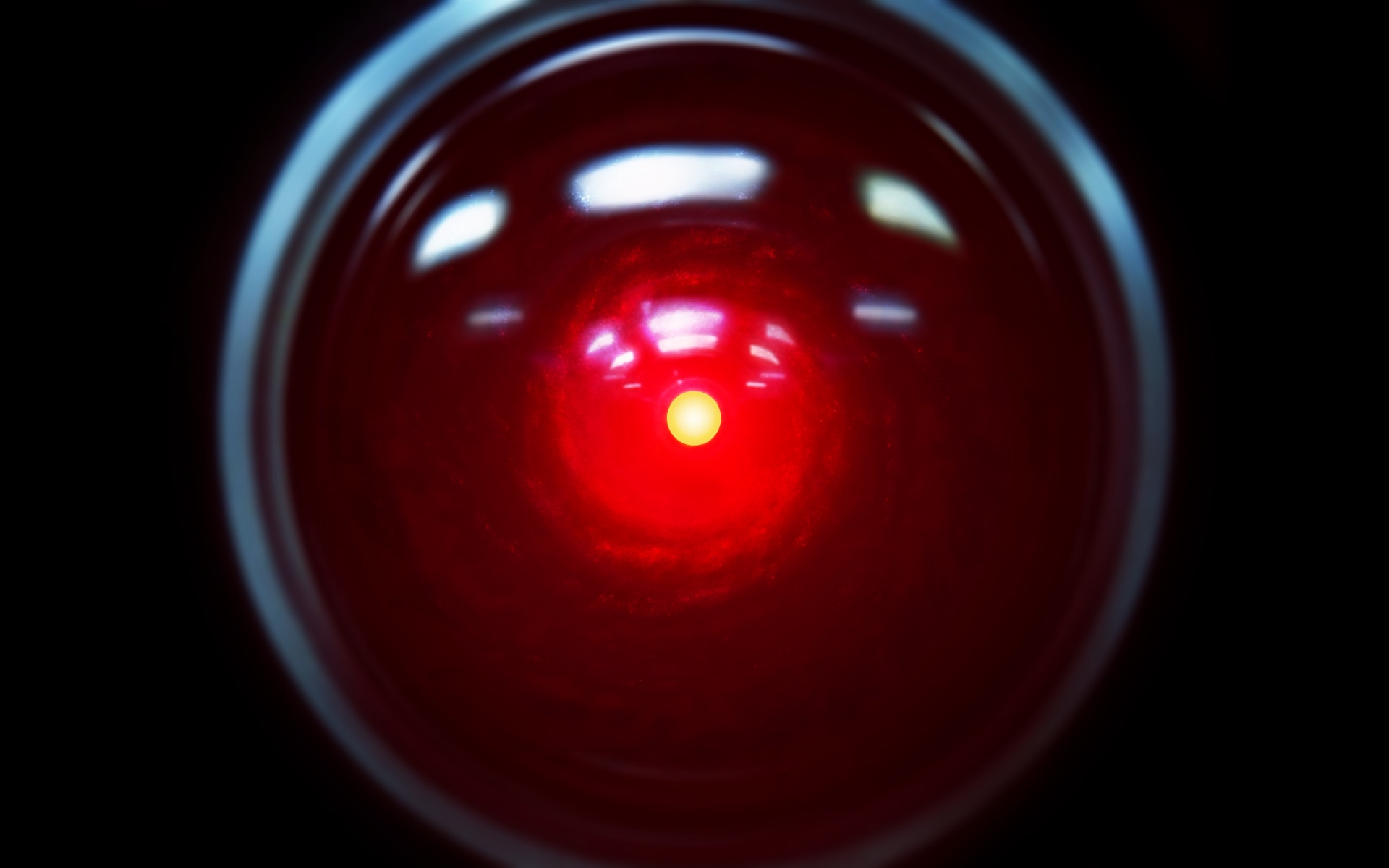
Unfortunately, 2001: A Space Odyssey does not lend many imaginative depictions of 21st century Earth. Despite a few bone-wielding apes on our prehistoric planet, Kubrick’s 2001: A Space Odyssey, as its title suggests, takes place mainly on board spaceships trekking through a limitless and (relatively) unchanging galaxy. But onboard any spaceship, technology is aplenty, often times in excess in sci-fi. Arguably the film’s most intriguing character is no man or ape, but a talking computer- the HAL 9000- stoic and physically lifeless. A novel idea in 1968, but almost 50 years later, HAL would simply join the likes of Siri, Watson and our unnamed Google Maps chauffeur on the ever increasing list of “talking computers.” Thankfully, our reliable trio have yet to cause the mayhem of HAL.

Wednesday, September 2, 2015

Why See This...The Trial [1962]


To read Franz Kafka one must imagine a world where logic and reason have no hold. To see such a place envisioned by one of cinema's greatest auteurs is a rare treat. Orson Welles’ 1962 adaptation of The Trial is by no means a conventional edge of your seat thriller. Looming beneath the shadows of his classics Citizen Kane and Touch of Evil, Welles’ The Trial is an underappreciated masterpiece of avant-garde cinema and surrealist art. Some call it hyper-stylized, over-the-top, nonsensical and entirely unwatchable. From the latter perspective, it is all these things, yes, outside of being unwatchable. But with The Trial, Welles has created an audacious film that demands to be remembered; something truly unlike any film that has come before or after it.

Monday, August 31, 2015

A Month in Movies...August 2015

Total Movies Watched: 12
1930s: 1
1950s: 1
1960s: 4
1970s: 2
2000s: 1
2010s: 4

Irrational Man [2015] dir. Woody Allen


Wednesday, August 12, 2015

Why See This...Mission Impossible: Rogue Nation [2015]

In an era obsessed with remakes, reboots and sequels, it comes as no surprise that 2015’s summer Blockbuster season has given us a fifth sequel. And once again, movie-goers ask themselves- is no. 5 worth seeing? In this case, yes. 

Writer/director Christopher McQuarrie’s Mission Impossible film opts for a simple, tried and true plot line of many past action films. This is no slight towards McQuarrie’s writing abilities, who earned an original screenplay Oscar for the sleek crime thriller The Usual Suspects. Thankfully, he knows such twists and turns do not fit the Mission Impossible mold. Audiences have flocked to the MI series for impressively staged action sequences and the whacky virtuosity of Ethan Hunt (Tom Cruise).  Both are in full force here.

The finals moments of Mission Impossible: Ghost Protocol, have Hunt and the IMF (Impossible Mission Force) barely saving San Francisco from nuclear annihilation. In Rogue Nation, the director of the CIA (Alec Baldwin), opposed to the Hunt’s unconventional tactics and admittedly lucky breaks, shuts down the IMF and a search for Hunt begins, who is to be charged with treason. Out in the cold, Hunt is in the midst of his own pursuit— tracking down a terror network known as the Syndicate. Hunt has linked them to a series of global terrorist attacks. After an early face to face encounter with its leader, the composed yet cunning Solomon Lane (Sean Harris), Hunt will stop at nothing to find him and bring down the Syndicate.

Rogue Nation marks the third collaboration between McQuarrie and Cruise in recent years. Their first pairing came in 2012 for the rather flat, more Bourne-esque thriller Jack Reacher.  Last year’s under-watched sci-fi film Edge ofTomorrow earned the two greater praise. What worked in Edge of Tomorrow that was absent in Jack Reacher, is Tom Cruises’ underutilized charm and comedic timing.  Ethan Hunt is not Jason Bourne and at no point does he ever try and mimic James Bond. He gets into trouble and occasionally relies on a little luck to get himself out of a jam. Hunt’s formidable charisma never strays too far and this is why we like him.

Cruise is certainly not the only actor who deserves praise in Rogue Nation. Already mentioning Sean Harris’s brilliantly restrained evil; Simon Pegg, always a crowd pleaser, is as good as ever as Hunt’s genial, sarcastic wingman. Rogue Nation also wins many fans for the return of Ving Rhames as the calm and cool Luther Stickell who was noticeably absent from Ghost Protocol. New to the film is Rebecca Ferguson as Ilsa Faust who appears right at home as the double/triple/quadruple crossing “frenemy” of Hunt. The ensemble works like a charm.  No character, big or small, steps out of their role to try and overtake the Ethan Hunt show. Early in the movie, as Faust helps Hunt out of an early predicament, he has to ask her, “this is the first time we’ve met, right?”

Like its predecessor, Rogue Nation opts for a livelier, funnier tone, something pushed aside in the darker, more intense MI 2 and 3. That isn't to say the movie does not have its share of edge of your seat, final-seconds-before-it-goes-kaboom-type drama we crave in Mission Impossible—motorcycle chases through the tiny streets of Casablanca, Hunt hanging onto a flying plane’s hatch in Belarus, scuba diving underneath a powerplant- without oxygen…A particularly memorable scene finds Hunt trying to desist three assassins high above an ongoing performance of Turandot at the Vienna Opera House. Its an unusually long scene for an action film, but the intricate staging, cross cutting and rich opera soundtrack make this scene and the movie as a whole, a pure delight to watch.

Ghost Protocol saw a resurgence in the critical praise of the MI series, and Rogue Nation rightfully surpasses it. If such a trend continues, I wouldn’t mind seeing the 53 year old Cruise throw himself off buildings and onto planes (or vice versa) again in a few years, and if he still can maybe even into his 60s, though at that point, hopefully he’ll keep his shirt on.


Sunday, August 25, 2013

Why See This...Blue Jasmine [2013]

Since 1966, Woody Allen has directed 43 features, amounting to almost one picture per year, an immense quantity for any one director. Best known for his wry romance comedies and quirky, rambling set of on-screen portrayals, Allen no doubt does comedy best.  But every once in a while, his writing take a dramatic turn.  The laughs come fewer and farther in exchange for a deeper study of human psyche and emotion, ala Match Point.  Not a typical Woody Allen movie some might say, but amidst a slew of signature comedies, these often stand as some of his most memorable work. Case and point with his latest feature, Blue Jasmine

Blue Jasmine, like Match Point is not a typical Woody Allen movie of recent memory.  The film lacks the outlandish faltery of last year’s To Rome with Love and the whimsical nostalgia of 2011’s gem, Midnight in Paris.  His newest movie is a swooning, cerebral drama detailing the likes of pain and loss, obsession and regret.  Blue Jasmine updates Tennessee Williams’ classic stage play “A Streetcar Named Desire.”  New Orleans swaps out for San Francisco and the 1950s becomes the present day. The nutty Blanche DuBois character, here called Jasmine, is marvelously depicted by veteran screen actress Cate Blanchett, who the Academy will no doubt recognize with at least a nomination.

Monday, December 31, 2012

My Month of Movies...December 2012

Total Movies Watched: 12

60s: 0     + 5 movies I certainly would not recommend to most people
70s: 2     + 2 Tarkovsky films
80s: 5     + 2 movies directed by a brother-brother duo
90s: 0     + 2 movies seen in theaters
00s: 0     + 2 re-watches
10s: 5     + 1 movies I was forced to sit through on a plane because I checked by books

Stalker [1979] dir. Andrei Tarkovsky


Offret (The Sacrafice) [1986] dir. Andrei Tarkovsky


Friday, November 30, 2012

My Month in Moves...November 2012

Total Movies Watched: 8 (Weak)

50s: 1     + 3 foreign films
60s: 0     + 2 movies seen in theaters
70s: 3     + 2 English movies watched entirely in Czech
80s: 0     + 1 re-watch
90s: 0
00s: 1
10s: 3

Hi Terezka [2001] dir. Robert Glinski


Ucho (The Ear) [1970] dir. Karel Kachnya

Wednesday, November 14, 2012

Why See This...Hukkle [2002]

To consider Hukkle a murder-mystery, as it is described, might be somewhat misleading, yet that is exactly what it is- to an extent.  Both murder-mystery and avant garde, this 2002 Hungarian film is a work of art that defies genres and categorization.  Hukkle is sometimes comical, other times eerie and always tantalizing. Hukkle assumes no relation to the classic story-styled narrative viewers are used to, director György Pálfi delivers more awe and wonder than thrills in his carefully presented survey of a rural Hungarian town.  There is a plot, sometimes, but the story is hardly what we concern ourselves with. 

Hukkle shares the similar scanty, free-wielding plot found in Richard Linklater’s Slacker (1991).  For Slacker, the existence of a plot is highly debatable.  The same can be said for Hukkle, whose murder-mystery premise takes a backseat in favor of captivating imagery and visual poetics. The film, which runs close to 80 minutes, contains no absolutely dialogue.  The closest thing we have is an old man who constantly hiccups.

And given the array of both intimate and grandiose images the movie boasts, maybe a more sensible comparison for Hukkle would be Terrence Malicks’s The Tree of Life, and Malick’s own infamous and unorthodox directing style.  As the camera peacefully meanders through the town , Pálfi evokes a stunningly visceral and meditative approach to his cinematography.  More often than not, his fascination seems to be less with people and more with the birds and bees, or tall golden strands of prairie grass blowing in the praise. Such pristine images force us to reassess some of the most obvious truths regarding movies as well as life and beauty.  We find ourselves not only captivated by images, but also by these simple sounds- the buzzing of bees or whispering winds against the tall meadow grass. Hukkle is a voyeuristic parade that evokes wonder as much as bafflement and confusion.

Wednesday, October 31, 2012

My Month in Movies...October 2012

Total Movies Watched: 10

Das Cabinet des Dr. Caligari [The Cabinet of Dr. Caligari] [1920] dir. Robert Wiene
The Cabinet of Dr. Caligari


Ju-On [2002] dir. Takashi Shimizu


The Texas Chainsaw Massacre [1974] dir. Tobe Hooper


Thursday, October 18, 2012

After Thoughts...The Texas Chainsaw Massacre [1974] (spoilers)

Anyway you look at it, The Texas Chainsaw Massacre is a brutal, grotesque and horrifying movie.  It is also funny.  Well, sort of.  In a movie filled with psychotic torturers, chainsaws and meat hooks, director Tobe Hopper finds a way to shed some humor onto this densely laughless circumstance.  The humor of The Texas Chainsaw Massacre comes in the form of satire.  It is subtle, neatly positioned under what I would argue to be the most horrific scene in the entire movie.  Given its context, the terror erupting out this scene overwhelms anything “funny” about what is going on.  But it is still there.

The “funny” scene in The Texas Chainsaw Massacre comes in the movie after Sally has been captured, tied up to a chair made of human bones and seated at the table.  When she awakes to find herself here, she gives out a blood-curling scream.  There’s clearly nothing funny for her.  But still, in a sick way, this is also the funniest and probably only funny part of the movie.  Let me explain using this picture-


Tuesday, October 16, 2012

Reel News...Hitchcock Gets A Trailer and Fall Release Date

Fitting perfectly into the month-long celebration of all things horror movies, I present to you (I bit late I  will add) the first trailer for the upcoming Hitchcock film starring Anthony Hopkins.  There's not much more to be said beyond that.  Any regular readers of the blog will know that I have keeping tabs on this movie ever since word first broke out in the summer.  For me, this has been one of my most anticipated movies of the season and the new trailer does nothing more than reassure that fact.

When this trailer surfaced on the web a few days ago, I knew it was just a preview for something still a long ways a way. Hitchcock was originally scheduled for a 2013 release, but with this trailer came news that the movie's release was being pushed up to November 23 of this year.  Rarely do we ever see this happen in Hollywood, as movies typically just get pushed back and delayed.  Exactly what we saw with Baz Luhrmann's The Great Gatsby.

With this new November 23rd release, this movie is in prime position for Oscar talks, more specifically, Anthony Hopkin's portrayal of Sir Alfred.  After seeing that first profile of Hopkins dressed as Alfred Hitchcock, I, and everyone else that saw that picture, knew it was a perfect casting decision.  And it seems no less true after watching the trailer as well.  Hopkins has it all locked in, down to the signature Hitchcock drawl under every word he speaks. speaks.

Hopkins steals the show and by right he should, but we can't ignore the rest of the talent funneling through this picture.  Helen Mirren has never given a bad performance in her life and Scarlett Johansson looks spot on as Janet Leigh.  Heck I even see Red Foreman in there.


Sunday, October 14, 2012

The Killer B's...Dawn of the Dead [1978]

When does an excessively violent zombie flick from the 1970s permit itself to be something more than a low grade horror movie?  I know it seems a bit counter-intuitive to begin this post describing the movie’s retraction from B status, but for as bad as some of the selections of The Killer B’s have been so far, I'd say it’s a far better start than most. 

Admired both as a great cinematic achievement and a terrific midnight fright, George A Romero’s Dawn of the Dead received almost a universal appeal on its release backed by both critics and horror junkies alike. Even to this day some 30 years later, the movie still has a marvelous showing, despite the many remakes it has produced and itself being a sequel.  Romero’s classic zombie piece consistently remains towards the top of many lists concerning the greatest horror movies of all time.

Our fascination with the living dead is nothing new, even at this movie’s release.  Dawn of the Dead is in fact a sequel to Romero’s Night of the Living Dead released ten years prior to this one and still we can dig deeper.  White Zombie, considered the first true zombie picture ever made, came out in 1932.  But even before this so-called invention of the cinematic zombie there were precursors of the zombie craze, most notably the stiff, muted somnambulist of The Cabinet of Dr.Caligari (1921).  Dawn of the Dead provided nothing particularly revolutionary or innovative in its story or zombie depiction compared to previous movies of its kind.  There’s not much you can do actually.  When zombies enter, it always becomes a struggle for survival.  And other than Danny Boyle giving zombies the ability to run in 28 Days Later, the creativity of one such creature is limited.  Despite the rather atypical and unoriginal formula left for these movies, Romero’s second installment of the zombie trilogy was a huge success.  Many consider Dawn of the Dead to be the best zombie movie ever made and I would certainly agree.   So to circle back to the initial question posed, what makes Dawn of the Dead such a spectacular movie?

Friday, October 12, 2012

Useless Clatter...12 Horror Classics Free on YouTube [and Some Thoughts on Existence]

Since in the 1970s, with the advent of the personal computer and the very, very earliest existence of the internet, we have lived in an era known as the Information Age.  Right alongside the Ice Age and the Middle Ages, there will be us— inventors of the personal computer and the internet— for better or for worse.  But that was a long time ago.  Gone are the days of VCRs, flatscreens and dial-up, what was once breakthrough technology was now an antiquated thing of the past.  We still find ourselves entranced by the pleasure of new technology just like we were 20 years ago. Only nowadays everything is just a newer version of what it once was— BluRay, HD, and wireless.  The personal computer can now be taken anywhere and you can have the entire World Wide Web comfortably inside your pocket.

The connection this has to movies is both vastly helpful and slightly critical.  The cinema, once a glamorous night on the town offering visitors an escape into worlds unknown, lost some of its magic.  TVs offer the same escape from the comforts of one’s family room.  No more worries about traffic or a babysitter.  Today it is even easier.  Streaming sites like Netflix, Hulu and YouTube now offer that entertainment almost anywhere on your laptop or even smart phone.  There is something lost in that transformation from a duplex movie theater to a three-inch cell phone screen.  It simply doesn’t compare. 

But let us not be too critical and consider this the demise of the movie theater.  After all, these handy pieces of technology offer audiences a slew of new movies, or a rather a reintroduction to old ones.  Classics and rare titles, B-movies and foreign wonders can all stay alive on the internet and be introduced to movie lovers anywhere on the globe.  Some sites like Netflix and Hulu have made fortunes meeting the demand of instant streaming, while others the same and slightly less in the form of free, (il)legal content.

Sunday, October 7, 2012

After Thoughts...Psycho [1960] (spoilers)

          FROM NORMAN TO NORMAN


+ If you have never seen Psycho and don't know what happens turn away now!!!  I would hate to be the cause of spoiling it for anyone.

Norman Bates is nothing I imagine a serial killer would be.  He is a shy and bashful; a young rather good looking guy who spends his days managing the family motel for his ailing mother.  But then again, after revisiting Psycho, Norman might just be everything I imagine a serial killer to be- he is shy and bashful, and awkward, reclusive and very, very creepy.

Revealing the timid and sincere Norman Bates as the psychotic, two-faced transvestite serial killer might be one of the greatest surprises the movie have ever given us.  Remembering all those reprimanding conversations overheard from his mother, the reveal comes as disturbing and the sympathy, out the window.  But for horror junkies watching the movie again, there could be a small sense of delight.  Watching that severely awkward dinner of sandwiches and milk as you wait for Marion Crane to step behind the shower curtain.

Anthony Perkins gives the performance of a life-time, one that many say he was born to play and never quite left behind.  Perkins took part in three more Psycho sequles, even directing the made for TV Psycho IV in 1990, 30 years after the release of Hitchcock's classic.

When the script was in the process of adapting Robert Bloch’s 1959 novel, Norman had to be changed drastically to suit Hitchcock’s liking.  The Norman Bates of the book took the form of an overweight 40-something year old man with drinking problems.  Inspired by real-life serial killer Ed Gein, also the inspiration for the equally creepy characters of The Texas Chainsaw Massacre and The Silence of the Lambs, there is nothing subtle about Bloch’s literary Norman Bates.

 But the legacy of the film rests largely on the unexpected reveal at its end, where we find out the boy next door is really a perverse maniac.  Everything we thought was true is now not, exactly how Hitch wanted it.  The film, while typically considered a horror piece or even slasher is one of the great psychological thrillers ever made.  But it is only until after its over do you realize this.  If Hitchcock’s Norman stayed true to the novel, none of that would have been possible.  The reveal would have more obvious and the thrill, much less thrilling.  I doubt Psycho would have been a bad movie if Hitchcock retained the character written by Bloch,  but it certainly would not possess the legacy it has today.  Sure, we would still have the infamous shower scene and Bernard Herrmann's screeching violins, but no Anthony Perkins, and frankly I cannot imagine a Psycho without him.

Wednesday, October 3, 2012

Why See This...The Cabinet of Dr. Caligari [1920]

With a month of horror movies ahead, I decided to start the month off right with a classic, one that is often considered the first horror movie ever made.

Think back to any of the mesmerizing and lucid worlds crafted by David Lynch or a psychological thriller from David Fincher, and it is certain that these two great directors watched, or more likely, scrutinized The Cabinet of Dr. Caligari before making any one of their own.  For Lynch, the obvious influence comes from the bizarre setting and backdrop of this early German expressionistic film.  Taking place in the fictional quaint mountain village of Holstenwall Germany, The Cabinet of Dr. Caligari is not set in some far off, distant land or even the future, as it may appear.  Though the director has placed the film into a seemingly normal German town, the subjectivity of its “realness” is certainly called into question.  Tilted walls, slanted rooftops appear as if a strong wind just came through the town and almost, just almost blew everything over.  The townspeople are real people inhabitating a real town, yet there is something just not right with how it all looks.  Holstenwall is surreal in every sense of the word.  With one glance, any avid David Lynch fan can recognize the obvious influence this movie has on the surreal and decrepit world of Eraserhead or even Inland Empire.  These movies deal with real people, yet the existence seems to take place somewhere far off from our thinking of reality. 


Inside the realm of a David Fincher thriller like Se7en or Fight Club, the characters of The Cabinet of Dr. Caligari are hardly molded caricatures.  This is really something considering the fact that we are dealing with a somnambulist and a mad scientist.  Short in stature, hunched back and always wearing a lab coat, Dr. Caligari looks like nothing else.  His counterpart, the stiff Frankenstein-like looking somnambulist named Cesare has been sleeping in a coffin for twenty three years and can tell the future.  At the arrival of the town fair, Caligari decides to display Ceasre as an exhibit.  Along with herds of people fascinated by the premise of the somnambulist, two friends arrive, Francis and Allen.  Upon learning his powers, Allen quickly shouts out to Ceasre asking how long he has to live.  The response: until dawn tomorrow.  Early the next morning Allen is dead, murdered in his own room.  Francis instantly puts the blame on Caligari and Ceasre.  But after an entire night perched outside their window, Francis finds nothing, expect that his has been abducted, all while the pair were sleeping.