Showing posts with label 2010s. Show all posts

Tuesday, September 18, 2012

Reel News...First Trailer for Spielberg's Lincoln [2012]

This season's most talked about movie that's not titled The Master, film fanatics and historical junkies alike recently got their first glimpse into the upcoming movie Lincoln.  Spielberg's film becomes the second one this year to center on our 16th President.  Unfortunately in the upcoming biopic,  President Lincoln will not be wielding an axe and hunting down vampires.  On the plus side however, he will be portrayed by two-time Oscar winner Daniel Day-Lewis, so that should help fill the vampire void a bit.  The movie also boasts a number of other top notch actors like Tommy Lee Jones, John Hawkes, Sally Field and Joseph Gordon-Levitt, so we should have no problems with the acting here.  And with some folks already wanting to hand Lewis his Academy Award after this trailer, it seems no surprise that all the focus is on him, as it always is with any DDL performance.
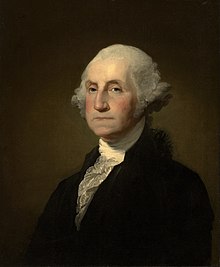
But this interest should not be all about the Oscars.  I'll admit due to my busy schedule this summer I could not find time to make it to go see Abraham Lincoln Vampire Hunter and as a result this trailer marks the first time I have ever seen Honest Abe portrayed cinematically.  Heck, it will be the first time I ever seen the guy move.  Like any other historical figure, our memory is served best by how ever many portraits and paintings they were willing to sit through.  Tall and stiff, slightly angled one way, I could hardly imagine George Washington doing anything other than standing that way.  To me, he has not other expression.  Lincoln is the same way, though the advent of photography during the mid-1800s offers him a bit more variety.

Watching the trailer, it seemed almost as if Spielberg knew that notion of mine and toyed with the idea.  The first time we see Lincoln it is from behind- along with the second and third times as well.  Like I have always imagined, he just sits there pondering as Congressman yell into his ears telling him how to end the war.  Almost a minute goes by before he says anything at all.  Finally when he gets the chance, his words are riveting, nothing short of fascinating- just as I would try to imagine.  Though I hate starting Oscar rumors before Thanksgiving at the very earliest, Lewis certainly shines in the brief glance we're given so I will agree for now that a third statue is not entirely out of the question.  The nomination is a gimme.

And I can see Lincoln racking up a few more nominations and acclaim outside of Lewis' acting.  Even last year's War Horse, a good not great Spielberg movie, grabbed six nominations and plenty of love from the critics.  I would think Lincoln has a stronger force behind it, but only time will tell. 


Saturday, August 25, 2012

Why See This...The Queen of Versailles [2012]

Before seeing The Queen of Versailles in theaters, I literally knew nothing about the movie, nothing about the infamous Siegel family, and nothing about Versailles (that last part’s not true).  By its title alone, I assumed the movie would be some sort of period piece drama, probably starring Kiera Knightley as one of King Louis XIV’s wives.  But as I glanced at the enormous poster before stepping inside the theater, I knew right then that my assumption was far off.  Worse, I feared that my mom dragged to some sort of Cougar Town movie spin-off.  Thankfully, that was wrong too.

The Queen of Versailles is a sort of quasi-documentary, though not quite a mocumentary. There is no narrator, but the characters, completely aware of the filming, speak directly to the camera.  In the spirit of popular TV shows like The Office and Parks & Rec., I figured a movie would soon bank on this trending style.  Our story revolves around the Siegels, David and Jackie Siegel and their eight children.  They are beyond far beyond any notion of the term. Don Siegel is the founder of Westgate Resorts, the largest timeshare company in the world.  The film counts his success showing pictures of David with celebrity faces like Donald Trump, George Clooney, all the 50 Miss America representatives, and oh yeah, he claims his money got George Bush elected to office.  What makes these 1%-ers such a sight is the fact that they are in process of building the largest single family home in America- thirteen bedrooms, twenty-three bathrooms, three swimming pools, two tennis courts, a twenty car garage.  When asked why, Don simply retorts, “Because I can.” 

Monday, June 25, 2012

Why See This...Moonrise Kingdom [2012]


As Moonrise Kingdom begins, its opening shots cleverly create the illusion that what you are looking at is not a movie.  What we see through the deliberately square and mechanically positioned camera is a series of perfectly set up rooms in a quaint New England styled cabin.  Everything in them so perfect and so intricately positioned that the frames look more like static pictures than a movie.  For a visual comparison, I immediately thought of the Thorne Miniature Room Gallery at the Art Institute of Chicago as I watched the film.  These miniature rooms bear a certain resemblance to the look of a Wes Anderson film. Whether they look like one of the cottage rooms from Anderson’s opening scene or instead take their design from 17th France, these miniature rooms all share a perfect design with a hint of elegance and intimacy.  In a similar way after seven features, cinephiles have come to recognize the Wes Anderson design within seconds of its playing- goldenrod hues, dysfunctional characters (lots of them) and always set to a rockin' soundtrack.  His style is wonderful and cleverly pronounced, though never over done.  Unfortunately, not the same can be said about his characters.

We have seen Anderson do this before with the distant brothers in The Darjeeling Limited, the incompetent, revenge-seeking marine men  of The Life Aquatic with SteveZissou and most famously with the hyper-dysfunctional family of The RoyalTenenbaums.  His consistent, cutting edge style has made him arguably the most recognizable director working today.  This unique influx of elegance and the deliberately bad make his movies such a joy to watch.  It mirrors the same fascination we have with watching videos other people failing and being able to only experience their pain vicariously and with a lots of laughter.  All in all though, Moonrise Kingdom is much more worth your time than 90 minutes on Fail Blog.

Thursday, May 24, 2012

Reel News...New Trailers/Teasers for "The Master," "The Great Gatsby" & "Anchorman Two"


      Big news today from three huge and highly anticipated upcoming movies.  Trailers and teasers have been released for Paul Thomas Anderson's The Master, Baz Luhrmann's adaptation of The Great Gatsby and of course, Anchorman Two.  Commentary  and videos for each project follow below.


The Master
To be honest, no one saw There Will Be Blood coming and no one was quite ready for what it held.  Sure, Paul Thomas Anderson has been steadily establishing himself as one of the few Hollywood auteurs with pictures like Boogie Nights, Magnolia and Punch Drunk Love, but There Will Be Blood seemed something beyond all these.  Many people call it a masterpiece.  Others, actually insisted the movie's ending tainted its own opportunity at such a title.  But if nothing else, everyone can agree Daniel Day-Lewis gave the performance of a lifetime, one that is surely up there with greatest ever.  For those who were left spellbound by Daniel Plainview & Co. (myself included), the five year hiatus of Paul Thomas Anderson has not been a favorable one.  Nonetheless, vague details about his follow up project, "something about a returning soldier and a new cult-like religion" had been out there for years and while nothing was ever confirmed, the untitled, upcoming project always carried the name The Master.

Well all that can be confirmed as The Master now has an official teaser trailer over at YouTube.  After producing an excellent score for There Will Be Blood, it makes sense that PTA has again grabbed Radiohead's Jonny Greenwood for the music.  It looks very much aligned with the same sort of unnerving dramatic tension that always hides within a PTA film.  So the bar should naturally be very high for this movie.  With no Daniel Day-Lewis, The Master now rests in the hands of Joaquin Phoenix.  Ever since he went AWOL from Hollywood, grew a huge beard and tried his luck at rapping in the I'm Still Here documentary (mockumentary?), Phoenix has yet to appear back on screen and re-establish himself as an actor of serious quality.  If he can do something along the lines of his impeccable Johnny Cash interpretation from Walk The Line (2005), then we have nothing to worry about.  We should expect great things.

Monday, January 23, 2012

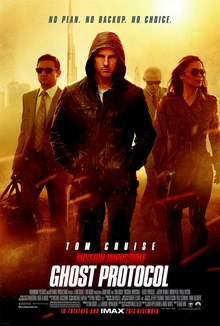
Why See This...Mission Impossible: Ghost Protocol [2011]

      Ghost Protocol being the fourth addition to the Mission Impossible series that started way back in 1996 has an interesting history to it.  The four film series has had four different directors and four very different receptions.  The original Mission Impossible, directed by the movie violence master himself Brian De Palma, was well received as a standard Hollywood action film with spurring star Tom Cruise as its lead.  Audiences liked it for what it was while critics seemed to be in the same boat.  Unfortunately M:I 2 could not follow down the same path.  This time the series fell into the hands of notable Kung Foo director John Woo.  Continuing box office success, many people felt that the movie was too corny and over the top with its action sequences.  Ethan Hunt wasn’t just a highly specialized secret agent but apparently a macho superhero as well. The highly stylized action choreography seemed to be a better fit for a Bruce Lee flick, not Ethan Hunt.  In other words, M:I 2 could not compete with the original.  Likewise, the third Mission Impossible directed by JJ Abrams continued downward but for different reasons.  This third film again tried to fall back on the successes of the first film but could not match it.  Those who were looking for a similar type of action from the second film were thrown off by the sometimes too intense sequences, especially the death of Ethan’s wife.

Thursday, January 5, 2012

Reel News...The Hunger Games Trailer

With Harry Potter putting his magic to rest and Twilight having only one left, people (teenage girls) can set their eyes on a new franchise this March in The Hunger Games.  Adapted to the screen from a series of books from author Suzanne Collins, The Hunger Games takes place in a ruthless society of the near future where children are chosen at random to fight each other to the death until a last-man-standing winner is declared in the country’s annual Hunger Games. Children ages 12-18 are eligible to partake in the tradition as entertainment for its viewers, reminiscent of gladiator battles of the Roman era.

To consider The Hunger Games as congenial to the Harry Potter and Twilight franchises might be a little wayward.  Yes they're all books, but from what’s evident, Hunger Games doesn’t appear to have any vampires or wizardry magic within its world.  Instead, it’s a story of adolescent struggle, and adversity to the extreme.  It centers on a young girl, Katniss, played by Jennifer Lawrence who received an Oscar nomination last year for her role in Winter’s Bone.  In a way, it’s a similar role for Lawrence as she, once again, plays a fatherless girl who takes up caring for her younger sibling.  Another notable member of the film’s cast is rock icon Lenny Kravitz.  Without an Oscar nomination  and little acting experience for that matter, it should be interesting seeing him on the big screen without a guitar but I guess we will have to wait until March for the opportunity.

Check out the trailer for Winter’s Bone. (There’s a link in the paragraph above.)  Watching it, I can definitely see why she was chosen for this upcoming trilogy.  


The Hunger Games is set for release on March 23, 2012.

Thursday, October 13, 2011

Useless Clatter...Why Dinosaurs in The Tree of Life + Why 2001?

     After witnessing cosmic explosions and other extraordinary images of the universe, moviegoers who came out to see The Tree of Life were probably not in total shock when two dinosaurs emerged on the screen.  But, after finishing the movie and trying to grasp what just went on for the last two and a half hours, a new question emerges- why on earth were there dinosaurs in this movie?
     Many people call to mind Stanley Kubrick’s 2001: A Space Odyssey when discussing The Tree of Life for the similarities in their extravagant cinematography and little dialogue.  Believe it or not, the special effects production for both films was done by the same man- Douglas Trumbull.  However another similarity often gets overlooked in their comparisons.  While these films both take place in human environments, The Tree of Life in 1950s Texas and 2001 simply set in the future, they both incorporate scenes in which humans do not exist.  In the beginning of Kubrick's film, he devotes an entire sequence to apes before ever arriving in space, simply titled “The Dawn of Man.”
     The Dawn of Man is almost a small movie in itself.  It centers on a group of apes in prehistory.  They lay in the barren desert stricken with hunger when suddenly a large monolith appears and they go berserk, howling with both fear and fascination.  But what pertains to The Tree of Life lies in the frames that follow. (This section can be seen in the video link below.)  The camera fades in onto a group of apes desperately searching for a meal when one of the apes comes across the skeleton of a boar.  He sits there and remains motionless when all of the sudden the music begins to play- he has struck an idea.  The ape picks up one of the bones and begins to pound on the skeleton, at first it’s a slow, methodical tapping, like the beating of a drum, but this quickly evolves into a ruthless and savage obliteration of the skeleton.  From here on, Ape can now wield the weapon- evolution. (The Dawn of Man).
     In Tree of Life, Malick does not toy with the realities of evolution, or ponder with the hypothesis that man has in fact evolved from dinosaurs.  No, the dinosaurs in his film serve a different purpose.  About twenty minutes into the film, where at this point the audience’s eyes have finally adjusted to witnessing the creation of the world all while being in 1950s Waco, the screen goes black.  From here, the camera fades in on a small creek amidst lush rolling hills of green; we realize that we are no longer in Waco, Texas.  Lying in the creek there is a small dinosaur that appears to fatally injured.  At this point, a large velociraptor-like dinosaur emerges and trots over to the wounded creature placing its foot on the neck of the small dinosaur ready to kill it.  But no killing follows.  The bigger dinosaur takes its foot off of its neck, gives it two gentle pats and simply walks away.
     So all in all, what purpose do the dinosaurs serve?  Why couldn’t this scene have remained in Texas and substituted the dinosaurs with wild dogs?  Why was it there at all?  The choice of dinosaurs must have been done to connect the images of creation with those of the 1950s Texas setting.  If one was to try and explain a synopsis of the film, it would most likely revolve around Jack’s youthful experiences, growing up through the decisions he faced.  But as the movie goes back and forth between creation and Texas and back, the dinosaurs serve as a connection between human life and the very beginnings of universal existence.  Choice, as instructed at the beginning of the film by either nature or by grace, is nothing new, proved to us by dinosaurs.  Its decision to kill or not is not all that different that Jack’s decisions to sneak into a stranger’s house or shoot his brother’s finger with a BB gun.  While the movie portrays the development of the universe and the earth, it does the same for the development of choice and free will.  But, what the movie brings forth here is the wholeness of compassion.  When the larger dinosaur lifts its foot off the other one’s throat and gently pats it on the head, there is a connection to a later scene in which Jack gently holds his brother’s finger after he has shot it with the BB gun.  Millions of years later in Waco, Texas, the scenario is almost the same.  However, while humans have developed into much more complex beings of thought, compassion is an age old virtue that lies within us all, innately.  Just as Kubrick uses apes to show the purposeful evolution of the human mind, Malick’s dinosaurs do the same, but for the human heart.
     Yes both 2001: A Space Odyssey and The Tree of Life probably could have managed without monkeys and dinosaurs, but it is these images that allow the director’s creativity and unique approach to narrative structure to take full effect.  On another note, it is these images that are most remembered, discussed and even argued over, thus allowing the films not to be forgotten.

 2001: A Space Odyssey (The Dawn of Man) cut-
            http://youtu.be/xd3-1tcOthg?hd=1

Saturday, September 17, 2011

Why See This...The Tree of Life [2011]


A historian’s record of the creation of earth and the existence of life may perhaps take volumes of and textbooks to explain.  Director Terrance Malick, on the other hand, manages to pull it off in a mere two and a half hours, or so it appears.  To say that The Tree of Life is built around answering the same questions that have given scientists trouble for centuries would be untrue, but given the magnitude of its images and ideologies, the case can almost be made.  The Tree of Life is Malick’s fifth feature film in a career spanning almost 40 years, something hard to figure for a Hollywood director.  Nevertheless, his reclusive tendencies and anonymous nature seem quite fitting for the premise of his latest feature. 
The Tree of Life opens with a quotation from the Bible’s Book of Job ("Where were you when I laid the foundations of the Earth, when the morning stars sang together and all the sons of God shouted for joy?" Job 38:4, 7) coupled together with an image of a small flame representing its creator, God.  It continues onward interlaced with grand images of what appears to as the creation of the world.  Saying that the film’s setting is a quaint Texas suburb in the 1950s would be doing Malick a disservice.  The movie jumps back and forth thereon to images of creation, seemingly, a particular exterior shot of the world as we witness the Big Bang, the age of Dinosaurs and forward to man’s journey to eternal life.  From its premise in Texas, the movie centers around a typical suburban family- the O’Brien family, consisting of a sweet and sincere, stay-at-home mother (Jessica Chastain), a hard-working and stern father (Brad Pitt) and three adolescent boys who enjoy endless summer days playing under the sun.  At its core, it a movie about relationships, about love for one’s family, and about love for one’s own self.  In the beginning, we are told that one of the O’Brien son’s has died young, at the age of 19.  But instead of establishing a story around the loss, the movie jumps back 20 years to the three of them growing up together, reflecting on the existence of life, rather than the loss
What is central to the movie’s foundation is a statement said by Mrs. O’Brien early on the film as if preaching to the audience- “...there were two ways through life - the way of nature and the way of grace. You have to choose which one you'll follow.”  From that point on, the film seems to be a grand illustration of what the world is, why we exist and what becomes of us after death.  Answering these types of questions is difficult, even for Harvard graduate Terrence Malick, who was rumored to have begun writing the script in the ‘80s under an early title, Q.  What The Tree of Life does is leave more questions than answers at its end, which can leave audiences with an unfulfilling conclusion. 
The Tree of Life does not possess a conventional narrative like a typical movie would and often gets caught up in its own surrealistic images.  In fact, its inability to stay put in one place symbolizes the perplexity and abrupt beauty of life itself.  At the same time, however, this and a lack of narrative is a cause for the movie’s inability to reach out to the typical movie-going audience.  But as unconventional as it is, the film did earn top honors at the 2011 Cannes Film Festival winning the Palm d’Or. Head judge for the event, Robert DeNiro claimed that the movie had “the size, the importance, and the tension that seemed to fit the prize.” 
Rather than looking at the screen for the answers set forth by the film’s premise, Malick uses the grandiose imagery as a way into our own minds.  The film’s nostalgic overtone of the experiences of childhood, filled with laughter, love, curiosity and fear can lead each viewer to reflect upon his or her own life after the film’s end. Asking yourself whether you live by nature or by grace may not be the film’s purpose.  What it does leave is an understanding of the beauty of human existence as a whole, our job as viewers is to uncover that in our own lives.